
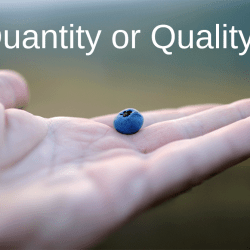
Have you ever struggled with being asked to produce more just to show progress instead of designing quality work? This happens often and we ignore it when clients are demanding and deadlines are tight. I’d like to share one experience with a project on how I handled the situation to change the mindset of the business owner to realign the project’s original purpose.
- Communicate First – try and reason with the business owner the difference between smoke screen progress vs. real progress. I worked on a project that was a mess from the beginning. A VP, the business owner, determined the success of the project based on how many UI screens I designed on a daily basis. He would come by unannounced and hover over my desk, to see how many I produced. We also had a new director on board to manage the project – he only cared about keeping the VP happy so he used those wireframes I designed as a measure to show success. When I explained to him that the project would not be successful with this approach and told him we needed to design it correctly, he did not want to hear anything that would delay meeting deadlines. He then told me to change the background colour to a different one to show a drastic visual change for our upcoming demo. He knew the business owner would be tricked by this simple change. I was disheartened and knew reasoning wasn’t working, so I tried another approach.
- Show by Action – deliver what was asked, but also show better alternatives. I walked into a meeting where the senior execs, directors, and team members, were awaiting the first demo. The business owner gave the pitch and was raving about my progress. He then turned to me and asked me if I agreed with him – that what I designed was as amazing as he thought it was. I said I designed what I was told to design. The business owner was confused at my response and demanded that I explain myself. I went on to say that I am not doing the job I was being paid to do. Everyone was shocked at my response. I went on to ask one question: “Are we designing this product to excel in the market or are we just trying to copy our competitors?” That stirred up a lot of uneasiness, and not surprisingly, there was still no response. I went on to show them a few other design options that would improve the product and explained that they were just some ideas to propel us in the right direction. People started to talk. It worked – I got their attention.
- Encourage Collaboration – engage stakeholders to be invested so they can help with making the product great. Now that you’ve successfully made your point, the stakeholders will, at the very least, feel that something has to change and will be more open to suggestions. They may even help come up with ideas you did not think of before. Ask for feedback from these stakeholders – this is invaluable information that will help improve the overall design of the product. Expect to receive positive and negative responses – use these to your advantage. Usability is essential in the design process and it will determine if your designs will provide a great user experience.
Summary: Communication is the key to a success product from beginning to end. Never lose sight of the purpose of your product so take action and come up with compelling designs. Accept that the design process takes time, and it will require collaboration and investment from the team to get your product to where it should be. Let your designs be your voice.
(Photo taken by Marian Chinciusan).
 CHOhesive